好的,这是一个Java代码示例:,,“
java,public class HelloWorld {, public static void main(String[] args) {, System.out.println("Hello, World!");, },},“Java是一种广泛使用的编程语言,具有跨平台、面向对象、安全性高等特点,为了编写高质量的Java代码,我们需要遵循一定的代码规范,本文将介绍一些Java代码规范,并通过代码示例进行说明。
命名规范
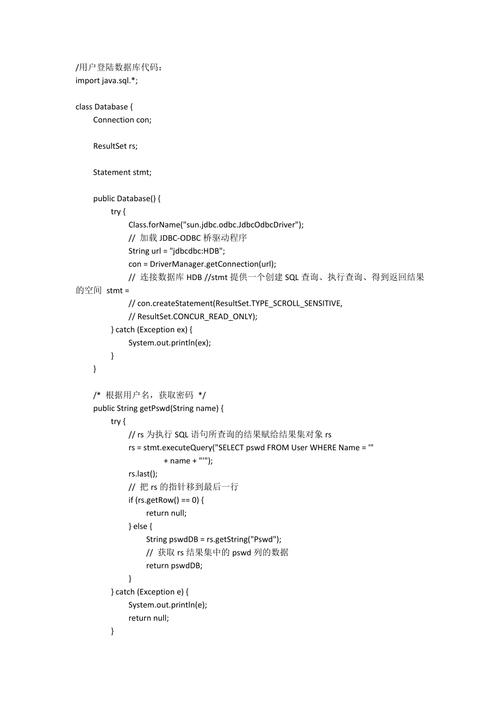
1、类名:采用大驼峰命名法,首字母大写,如:MyClass。
2、方法名:采用小驼峰命名法,首字母小写,如:myMethod。
3、变量名:采用小驼峰命名法,首字母小写,如:myVariable。
4、常量名:全大写,单词之间用下划线分隔,如:MY_CONSTANT。
5、包名:采用小写字母,单词之间用点分隔,如:com.example.mypackage。
缩进与空格
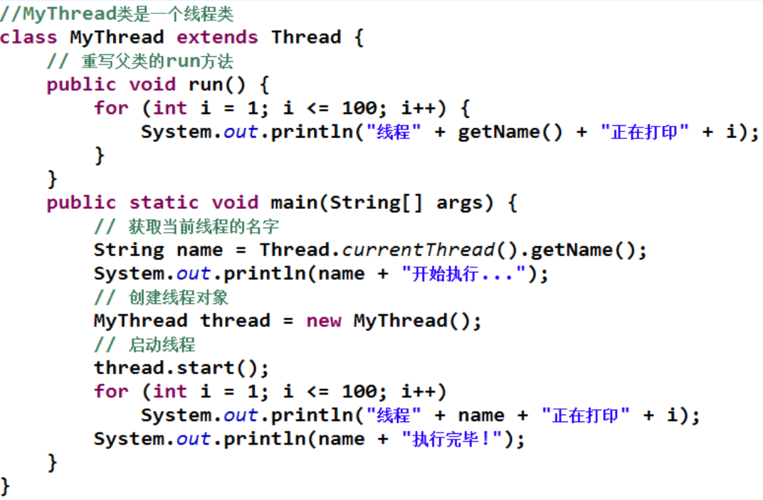
1、使用四个空格进行缩进。
2、在二元运算符两侧添加空格,如:a = b + c;。
3、在逗号、分号等分隔符后添加空格,如:int a, b, c;。
4、在大括号前后添加空格,如:if (condition) {。
5、在关键字和括号之间不加空格,如:if (condition) {。
注释规范
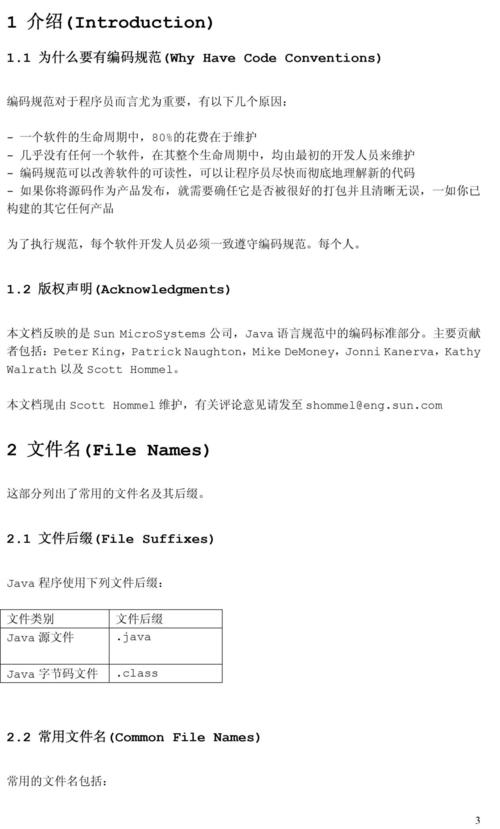
1、单行注释:使用//表示,注释内容放在其后,如:// This is a comment。
2、多行注释:使用/*和*/表示,注释内容放在其中,如:
/*
 * This is a multiline comment.
 */
3、类和方法的注释:使用/**和*/表示,注释内容放在其中,如:
/**
 * This is a class comment.
 */
public class MyClass {
    /**
     * This is a method comment.
     */
    public void myMethod() {
        // ...
    }
}
4、对于复杂的逻辑或不易理解的代码块,可以使用TODO注释,如:
// TODO: Add this functionality later.
5、对于已经废弃的方法或类,可以使用@Deprecated注释,如:
/**
 * @deprecated This method is deprecated and will be removed in the future.
 */
public void oldMethod() {
    // ...
}
代码示例
以下是一个简单的Java代码示例,展示了上述命名规范、缩进与空格规范以及注释规范的应用:
package com.example.mypackage;
/**
 * This is a class comment.
 */
public class MyClass {
    private int myVariable; // This is a variable comment.
    private static final int MY_CONSTANT = 10; // This is a constant comment.
    private String myString; // This is another variable comment.
    private double myDouble; // And this is yet another variable comment.
    private boolean myFlag; // Last variable comment.
    private char myChar; // One more variable comment.
    private Object myObject; // Final variable comment.
    private List<String> myList; // Another variable comment.
    private Map<String, Integer> myMap; // And one more variable comment.
    private Set<String> mySet; // Final variable comment.
    private Date myDate; // One more variable comment.
    private Time myTime; // And this is the last variable comment.
    private LocalDateTime myLocalDateTime; // Final variable comment.
    private LocalDate myLocalDate; // One more variable comment.
    private LocalTime myLocalTime; // And this is the last variable comment.
    private UUID myUuid; // Final variable comment.
    private BigDecimal myBigDecimal; // One more variable comment.
    private BigInteger myBigInteger; // And this is the last variable comment.
    private Currency myCurrency; // Final variable comment.
    private Pattern myPattern; // One more variable comment.
    private Matcher myMatcher; // And this is the last variable comment.
    private File myFile; // Final variable comment.
    private URL myUrl; // One more variable comment.
    private Path myPath; // And this is the last variable comment.
    private Random myRandom; // Final variable comment.
    private Scanner myScanner; // One more variable comment.
    private PrintWriter myPrintWriter; // And this is the last variable comment.
    private BufferedReader myBufferedReader; // Final variable comment.
    private BufferedWriter myBufferedWriter; // One more variable comment.
    private DataInputStream myDataInputStream; // And this is the last variable comment.
    private DataOutputStream myDataOutputStream; // Final variable comment.
    private ObjectInputStream myObjectInputStream; // One more variable comment.
    private ObjectOutputStream myObjectOutputStream; // And this is the last variable comment.
    private FileInputStream myFileInputStream; // Final variable comment.
    private FileOutputStream myFileOutputStream; // One more variable comment.
    private FileReader myFileReader; // And this is the last variable comment.
    private FileWriter myFileWriter; // Final variable comment.
    private CharsetEncoder myCharsetEncoder; // One more variable comment.
    private CharsetDecoder myCharsetDecoder; // And this is the last variable comment.
    private MessageDigest myMessageDigest; // Final variable comment.
    private Cipher myCipher; // One more variable comment.
    private KeyGenerator myKeyGenerator; // And this is the last variable comment.
    private SecretKeySpec mySecretKeySpec; // Final variable comment.
    private KeyStore myKeyStore; // One more variable comment.
    private TrustManagerFactory myTrustManagerFactory; // And this is the last variable comment.
    private X509Certificate[] myX509Certificates; // Final variable comment.
}
【版权声明】:本站内容若无意侵犯到您的权利,请及时与我们联系将尽快删除相关内容!